The Bruise Brothers: Bob Probert and Joey Kocur, Detroit Red Wings' Most Feared Duo
Drafted in the 1983 NHL Entry Draft, the same year the Detroit Red Wings selected Steve Yzerman fourth overall, Bob Probert and Joey Kocur forged one of the most formidable duos in franchise and league history. During an era defined by physical hockey, they embraced the role of enforcers, funda
Drafted in the 1983 NHL Entry Draft, the same year the Detroit Red Wings selected Steve Yzerman fourth overall, Bob Probert and Joey Kocur forged one of the most formidable duos in franchise and league history. During an era defined by physical hockey, they embraced the role of enforcers, fundamentally altering Detroit's competitive identity and becoming symbols of intimidation and respect on the ice.
In the late 1980s and early 1990s, the “Bruise Brothers” were unrivaled in accumulating Penalty Minutes (PIM) across the NHL. During the 1987-1988 season, Probert amassed an astounding 398 PIM, setting a Red Wings single-season record, while also ranking third on the team in offensive production with 62 points. This unique blend of physical prowess and tangible on-ice contribution solidified their legacy within the organization.
In the late '80s and early '90s, the "Bruise Brothers" dominated penalty minutes.
To highlight the stark contrast with the modern NHL, the league leader in PIM for the 2023-24 season was Nikita Zadorov with 145 minutes, a figure he again topped in 2024-25 with just over 120. These numbers are a far cry from those posted by Probert and Kocur, who collectively accumulated over 4,000 penalty minutes while wearing the Detroit uniform, cementing their status as the most feared enforcer tandem in Red Wings history and one of the most iconic in the NHL.
Leadership and Character in Detroit Red Wings History
Between 1985 and 1991, Bob Probert and Joey Kocur spent six seasons together with the Detroit Red Wings. They formed a partnership that went beyond mere statistics, with their impact often measured in the respect they commanded. During a crucial rebuilding phase for the franchise, they instilled character and a combative identity that was integral to the team's development.
Throughout that period, they combined for 2,897 penalty minutes. A significant portion of these penalties came in direct defense of the team's most skilled players, particularly Steve Yzerman. This coexistence of offensive talent and imposing physical presence defined Detroit's competitive DNA during those years.
After Probert's departure in 1994 to the Chicago Blackhawks, the narrative shifted. Years later, Kocur returned to Detroit (1996–1999) at Yzerman's suggestion. Though his role had evolved, his experience proved invaluable during the 1997 and 1998 Stanley Cup victories, which solidified the resurgence of Hockeytown.
When Probert and Kocur eventually faced each other as opponents, their encounters carried significant symbolic weight. It was more than just a fight; it was a clash between two figures who had helped define an era in Detroit. As time passed and the NHL's style of play evolved, the Bruise Brothers remained synonymous with the leadership and physical identity of the Red Wings.
The Culture of the Enforcer in the NHL
An enforcer in the NHL is a player specializing in physical play. Their primary role is to protect teammates and retaliate against opponent aggression. While often associated with fourth-line forwards, defensemen and centers also occasionally filled this role.
In the 1970s NHL, the enforcer was key to building identity and respect.
Historically notable enforcers include Dave “The Hammer” Schultz (Philadelphia Flyers), a prominent figure of the “Broad Street Bullies”; Terry “Terrible” O’Reilly (Boston Bruins); and Dave Semenko (Edmonton Oilers), famously known as Wayne Gretzky’s bodyguard. These players defined an era where intimidation and Penalty Minutes (PIM) were foundational elements of the game.
From Classic Enforcer to Two-Way Player: The NHL's Transformation
For decades, the classic NHL enforcer had a clear function: to intimidate and protect. In the 1970s and 80s, accumulating Penalty Minutes (PIM) was an inherent part of the role. Physical presence sent an immediate message to opponents, and respect was often enforced through sheer force.
However, the evolution of the game shifted this paradigm. Speed increased, tactical systems became more complex, and the space for one-dimensional specialists dwindled. Modern hockey demands complete players; physical presence alone is no longer enough. This led to the transition towards the two-way forward profile. Today's players must contribute offensively and defensively, maintain intensity, skate efficiently, and adapt to diverse game situations. Aggressiveness became a complementary trait, rather than the primary identity.
In the current NHL, players like Tom Wilson (Washington Capitals) exemplify this transformation. He maintains a strong physical presence but also contributes offensively and plays a role in key moments. Similarly, Nikita Zadorov and Arber Xhekaj are players who retain their toughness within modern, disciplined team structures.
The evolution also redefined the defenseman's role. Today, two-way profiles like Moritz Seider, combining offensive impact with physical presence, coexist with puck-moving defensemen like Quinn Hughes, whose speed and vision influence all areas of the ice. The traditional physical archetype has evolved into the shutdown model, exemplified by Jaccob Slavin (Carolina Hurricanes), who specializes in neutralizing star players through positional intelligence and tactical discipline.
The NHL has changed. The pure enforcer has faded, but their legacy hasn't vanished: it has transformed into a competitive character, adapted to a faster, more technical, and strategic league.
Fresh materials — Sport news
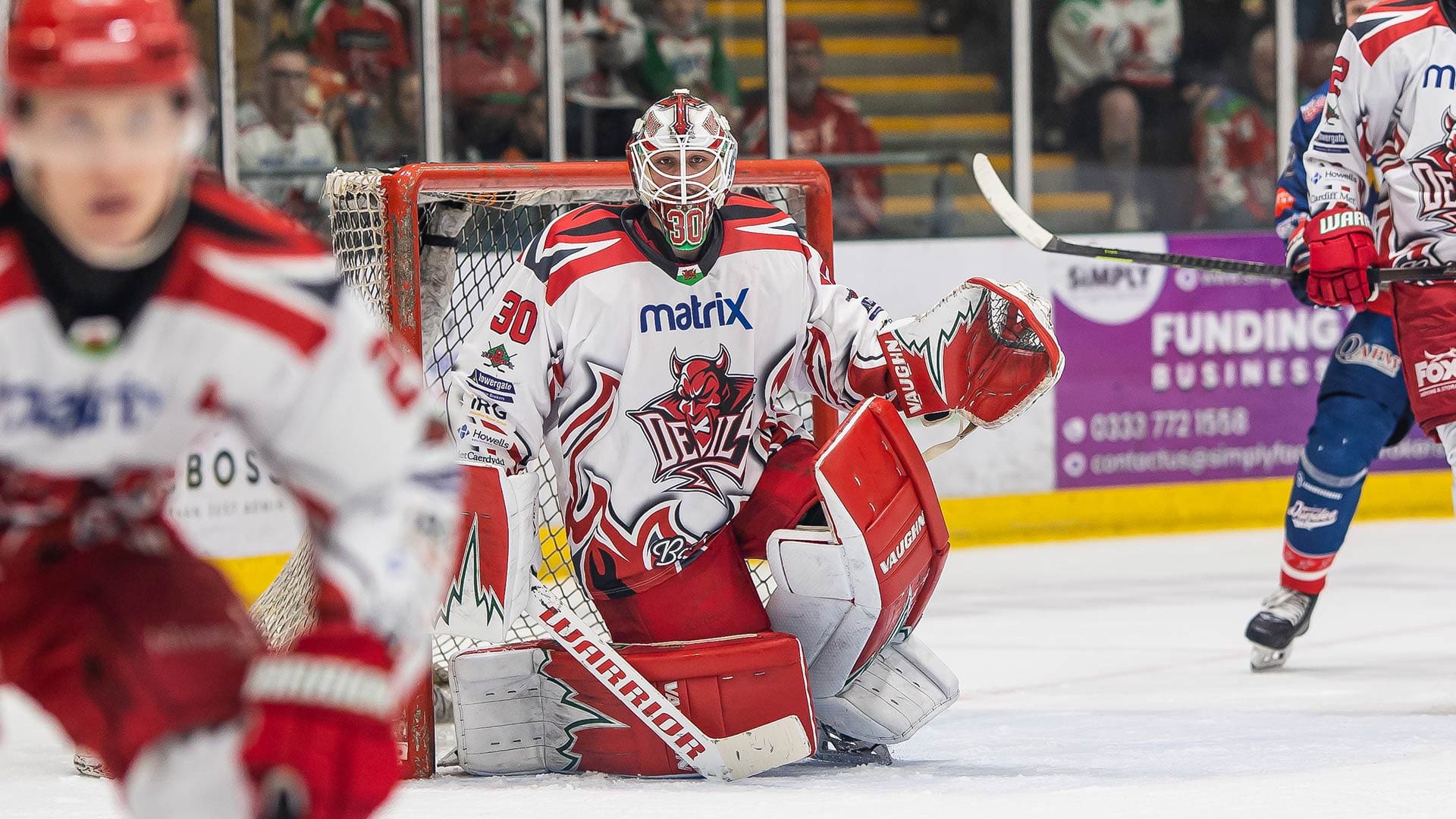
Elite League Team of the Week: Round 30
The Elite League concluded its regular season with thrilling action, as teams solidified playoff positions and key players delivered exceptional performances. As the league prepares for the postseason, we highlight the standout individuals who made a significant impact in Round 30. Elite L
Elite League Ice Hockey Round-Up: Glasgow Clan Suffers Humiliating Defeat to Sheffield Steelers
The Elite League regular season is drawing to a close, with just one game remaining before the playoffs. Following a series of high-scoring encounters on the penultimate night of the campaign, the race for top-eight seeding remains intensely competitive. The Cardiff Devils, Nottingham Panth
Elite League Team of the Month: March 2026
As March draws to a close, the Elite League season is approaching its thrilling climax. Only a few regular-season games are left before the intensity of the playoffs takes over for two weeks of high-stakes hockey. March was a significant month, with the Belfast Giants securing their first titl
Future stars on thin ice: How children’s and junior teams are preparing for success in UK clubs
British ice hockey rarely grabs international headlines, which makes every emerging talent even more significant. Behind every young player's debut in the Elite League or the national team lie countless hours on small rinks across the country, cold morning practices, and dedicated coaching. Chi
Pete Russell Returns to MK Lightning as Director of Hockey and Head Coach
Pete Russell, the highly respected Great Britain men’s national team head coach, has been appointed Director of Hockey and Head Coach for the Planet Ice NIHL National Division side, MK Lightning. This move marks a significant homecoming for Russell, who is widely regarded as one of the mo
Team Great Britain Names Six World Championship Debutants to 2026 Roster
Great Britain has finalized its roster for the 2026 IIHF World Championship, featuring six players making their debut on the international stage. Coventry Blaze goaltender Mat Robson, 29, headlines the list of newcomers, joining the national squad for the first time after gaining eligibili