
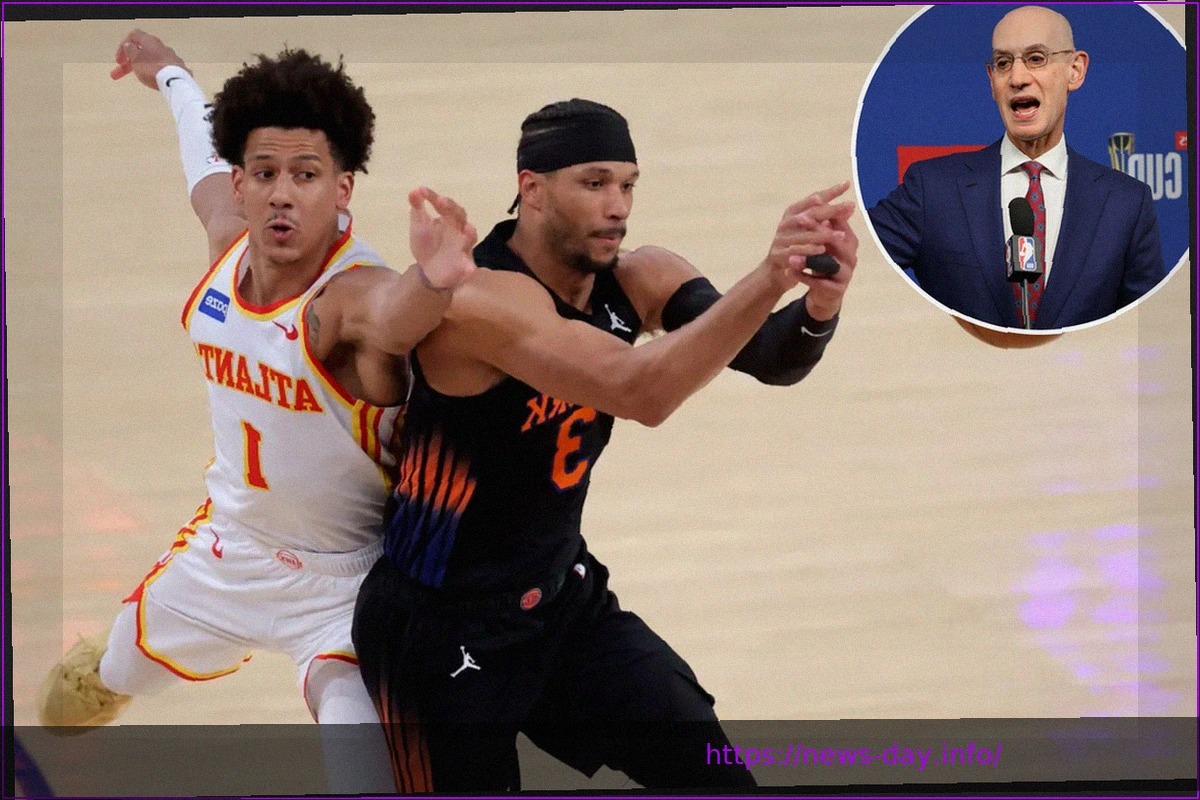
NBA Commissioner Adam Silver has announced that the league is on the verge of adopting Artificial Intelligence (AI) to automate a specific set of officiating decisions. This move signals a significant technological shift in how games will be managed, with the primary goal of improving the accuracy and consistency of calls made during gameplay.
Potential Applications of AI in NBA Officiating
While the exact nature of the calls to be automated has not been fully detailed, it is widely speculated that AI will initially be deployed for objective infractions that can be definitively determined through data analysis. These could include:
- Out-of-bounds calls: Sensors and advanced camera systems could accurately track the ball and players’ positions relative to the boundary lines, eliminating human error.
- Goaltending and basket interference: AI could analyze the trajectory of the ball and the position of defenders and offensive players in relation to the rim in real-time, providing immediate and precise judgments.
- Certain shooting fouls: While more complex, AI might be able to identify clear contact during a shooting motion, especially in situations where the human eye struggles to capture the precise moment of impact.
How AI Could Work
The implementation of AI in NBA officiating would likely involve a sophisticated network of high-definition cameras strategically placed throughout the arena. These cameras would capture every angle of the game, feeding data into an AI system. This system would then process the visual information, cross-referencing it with predefined rules and parameters to make a determination. In cases where the AI flags a potential infraction, it could either:
- Automatically issue a call: For clear-cut situations, the AI could directly signal a foul or infraction, reducing the need for human intervention.
- Provide data-driven support to referees: In more nuanced scenarios, the AI could present referees with objective data and replays, assisting them in making their final judgment. This would act as a powerful tool for confirmation or correction.
Benefits and Implications
The introduction of AI aims to bring a new level of precision and fairness to NBA games. By reducing subjective interpretation, the league hopes to minimize controversial calls and ensure a more consistent playing environment. This could lead to:
- Fewer disputed calls and appeals.
- A more predictable game flow.
- Increased trust in the officiating process.
However, the integration of AI also raises questions about the role of human referees, the potential for technological glitches, and the ethical considerations of relying on algorithms for critical game decisions. The NBA’s phased approach to implementation suggests a careful consideration of these factors as they navigate this innovative frontier in sports officiating.