FIGC Election: Coni's Stance on Eligibility, No Immediate Commissariamento
Legal opinions obtained by ANSA indicate that FIGC membership was a fundamental requirement for the presidency, a status Giovanni Malagò lacked. These documents, from lawyers Franco Gaetano Scoca, Luigi Medugno, Massimo Coccia, and Alberto Angeletti, confirm the invalidity of an election held without this prerequisite.
However, the opinions do not mandate immediate commissariamento of the Italian Football Federation (FIGC). Medugno's assessment suggests that Coni's relevant bodies must evaluate the severity of the infringements with a degree of discretion. To justify such a measure, as per Article 7 of the Coni Statute, 'serious violations within the sports order' are required. These are defined as actions that compromise the autonomy, regularity, or institutional goals of the organization.
The core issue will be determining the gravity of these violations. Medugno frames the upcoming decision as a 'strictly technical-legal matter, never political.' The aim is to ascertain whether 'omissions, negligence, or incompetence' occurred, or if the conduct reaches the threshold of a 'serious violation of the Statute and the fundamental Principles above it.'
Lawyer Scoca concurs, stating, 'It is up to Coni's competent bodies to evaluate the consequences,' while leaving no doubt on the merit: 'The election of a non-member is invalid.' All four opinions align with the General Prosecutor of Sport's view. Article 29, paragraph 1 of the FIGC Statute, requiring candidates to be 'in good standing with membership at the date of candidacy submission,' implies an active membership as a fundamental condition. This contrasts with the FIGC Prosecutor's interpretation that 'being in good standing with membership' differs from 'being a member.' Coccia labels it a 'subjective requirement for candidacy and subsequent eligibility,' a point Angeletti deems beyond question.
Angeletti, though, notes the absence of appeals against the candidacy within the statutory timeframe (Article 21, paragraph 4 requires the Federal Guarantee Commission to verify incompatibilities within seven days of the election). He states he has no information about whether such an appeal was filed.
Medugno highlights past appeals by lawyer Renato Miele, which, despite being inadmissible, pointed out a fundamental flaw. He criticizes the Federal Prosecutor for inaction and the Federation for ignoring access requests and failing to participate in extra-federal proceedings. This 'genetic defect' in the election, he suggests, leaves Coni with only 'discretionary measures' to restore violated legality.
The term 'commissariamento' appears hypothetically later in Medugno's opinion, stating it will be up to the National Board to propose it, and the National Council to decide whether to approve it. The violation is acknowledged, but its impact requires assessment.
Meanwhile, lawyer Renato Miele, the presidential candidate excluded from the election who brought Malagò's membership status to light, has formally requested Coni to act. He urges the governing bodies to proceed with the FIGC's commissariamento, asserting it is a legal obligation due to undisputed 'serious violations of the sports order by the FIGC's directive bodies.'
Fresh materials — Football News

Juventus Eyes Folarin Balogun, But Faces Competition
Juventus continues to follow Folarin Balogun, the Monaco forward who could become a key name for the club's offensive overhaul planned for summer 2027. The 2001-born player is on the shortlist of strikers being considered by the management, alongside Benjamin Sesko and Brian Brobbey. Balogun o

Barcelona Follows Nicolò Tresoldi
Barcelona is tracking Nicolò Tresoldi, a striker for Club Brugge. Born in Cagliari, Tresoldi has also been linked with Juventus, and his estimated value has now reached approximately 25 million euros. Another young striker is making significant waves in the European transfer market, and his n
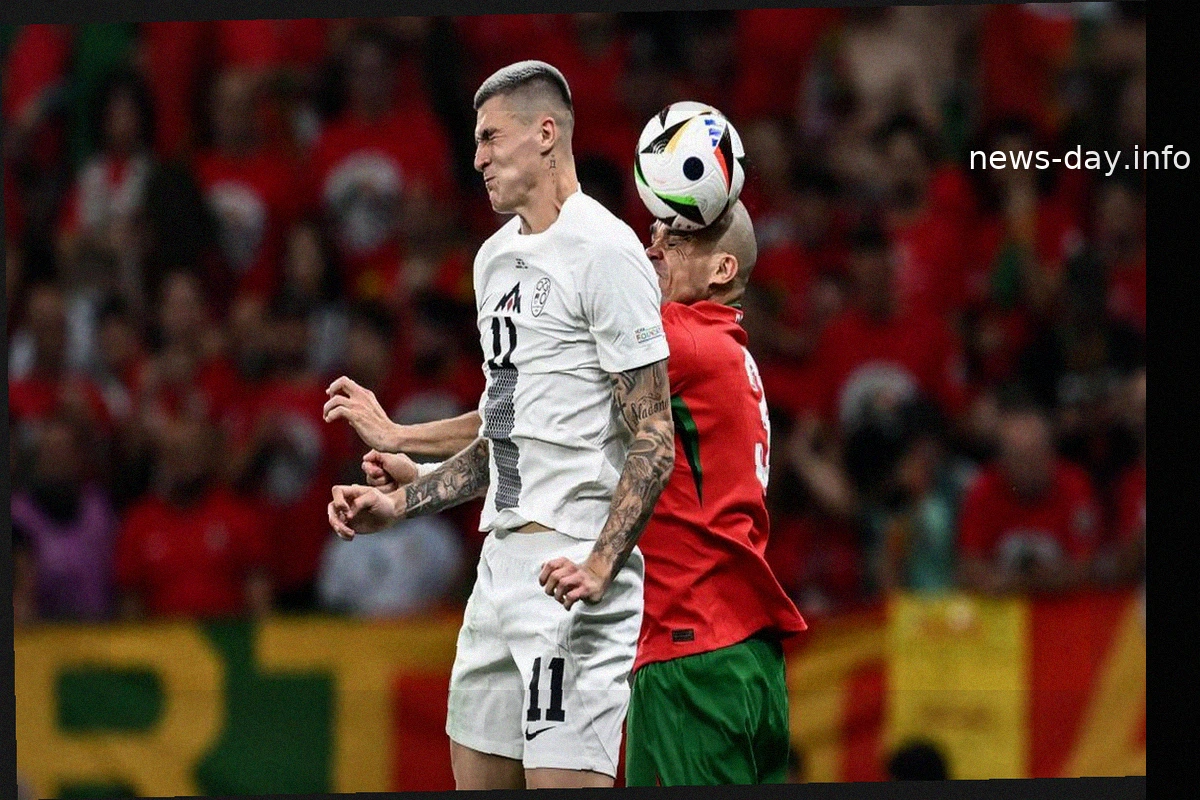
Juventus considers Benjamin Sesko for summer attack
Juventus is eyeing Benjamin Sesko to bolster their forward line. The Slovenian striker from Manchester United is valued at approximately €75 million and is also a target for Barcelona in 2027. Juventus is already planning for its attacking future, with Benjamin Sesko, the young Slovenian ce

Emotions-Rollercoaster: Zidanes Debüt im Stade de France
The outcome was disappointing. In his first home match as the French national team coach, Zinedine Zidane had to settle for a 1:1 draw against Italy. He later described this as 'frustrating' – yet his feelings were entirely different at first.

Edon Zhegrova Continues His Strong Form
Edon Zhegrova left his mark on Kosovo's match against Israel in just a few minutes. The Juventus winger came off the bench in the Nations League fixture, which ended 0-0 on the neutral ground in Debrecen. He was introduced in the 77th minute, replacing Valmir Matoshi. While insufficient

Bastoni: Zenica is behind him. Inter's decisive player in Paris too: "A few episodes won't ruin my career"
Alessandro Bastoni followed up his goal against Turkey with another decisive strike, this time away to France, facing one of the world's strongest national teams. His high press on Da Cunha and composure in front of goal led the Inter defender to his second consecutive goal. Bastoni last wore