
MARK AND JOSH Bartelstein are accustomed to hearing the same old jokes. “Oh, with [player name]`s situation, the next family gathering will be awkward, won`t it?” Yet, sometimes reality proves far stranger than predictable humor.
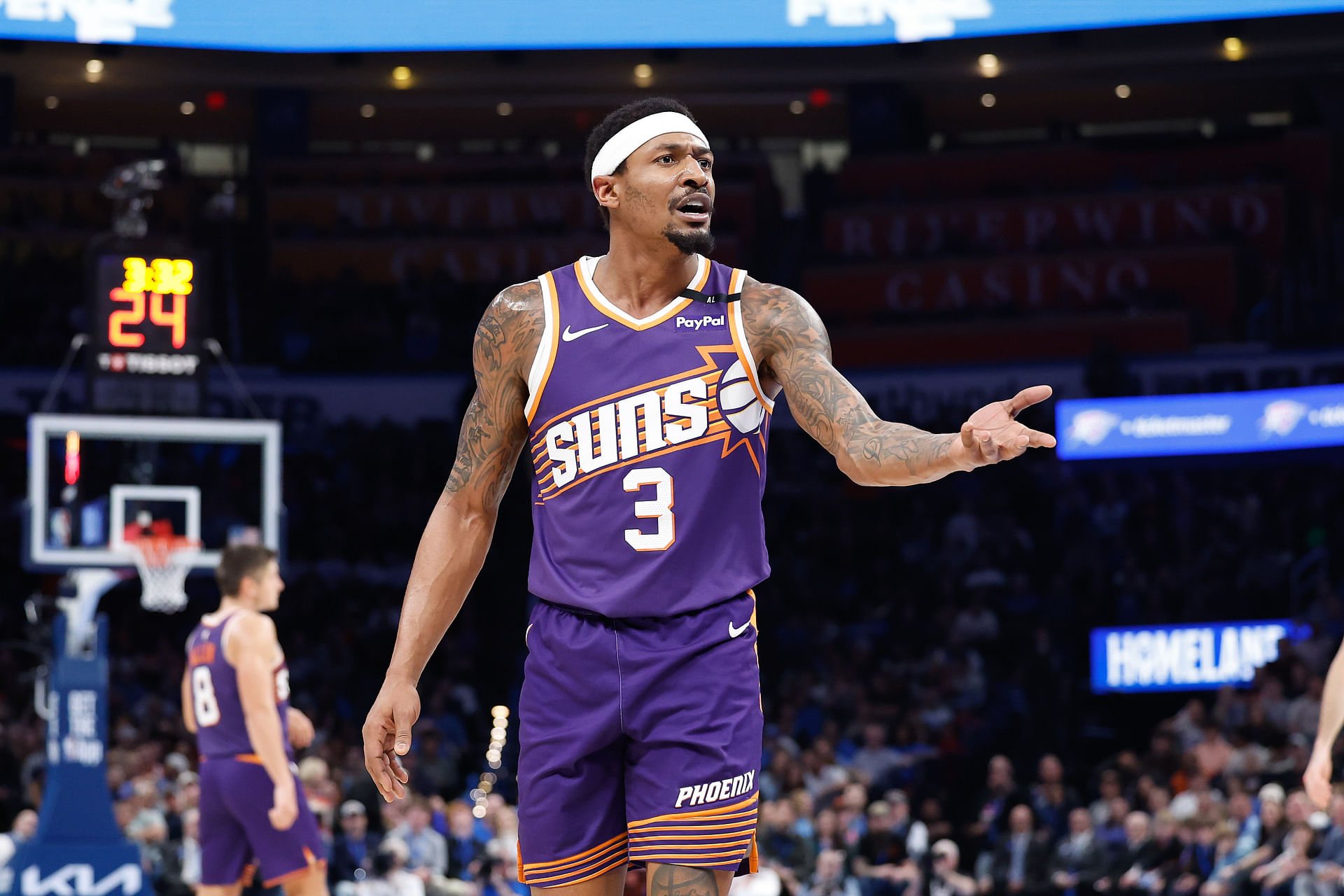
On Wednesday, veteran agent Mark Bartelstein finalized a massive $99 million contract buyout for his star client, Bradley Beal, with the Phoenix Suns, whose CEO is his son, Josh Bartelstein. This concluded a saga that had spanned several months.
On Thursday, they will celebrate Josh`s 36th birthday in Chicago. This weekend, a grand Bartelstein family wedding is set to take place, as Mark`s daughter and Josh`s sister, Courtney, is marrying her fiancé, Max.
“Yes, there will be some jokes when I get the microphone,” Josh Bartelstein stated. “My mom and grandmothers are going to love it.”
Following the wedding, Mark Bartelstein is expected to finalize a contract for Beal to join the LA Clippers on a two-year, $11 million deal. This move concludes a spectacular offseason for the Clippers and marks the end of two challenging years for both the Suns and Beal.
Beal`s Phoenix Tenure Ends in Three Acts
1) After new head coach Jordan Ott was hired in early June following an extensive search, he met with Beal and outlined a plan for his role next season, according to sources. Beal had just finished a season with the lowest usage rate of his career; his role had significantly diminished under former coach Mike Budenholzer, who even benched him from the starting lineup for a six-week period.
Beal`s statistics still appeared respectable; he averaged 17 points, shooting nearly 50% from the field and just under 40% from three-point range. However, with his maximum $50 million salary and the team`s significant underperformance, this production failed to meet expectations or justify the cost.
During his pitch to Beal, Ott hinted that the Suns hadn`t entirely abandoned the idea of bringing him back next season. Given the two years and $113 million remaining on his contract, along with a no-trade clause—which had completely undermined the Suns` ability to trade him last winter—such a notion wasn`t surprising.
Beal appreciated Ott`s efforts, but following postseason meetings with Bartelstein to assess the situation, he had already decided that he needed to depart from Phoenix if an opportunity arose.
“We couldn`t risk [losing another year],” Mark Bartelstein stated. “This decision was purely about basketball. Bradley wants to play in significant games and crucial moments.”
2) On June 22, the Suns agreed to trade superstar Kevin Durant to the Houston Rockets. In return, they acquired 23-year-old guard Jalen Green, whom the Suns identified as a new cornerstone for their perimeter offense alongside Devin Booker.
Before accepting the Rockets` offer, the Suns had extensive discussions with the Minnesota Timberwolves about trading Durant for a package that included star center Rudy Gobert, guard Donte DiVincenzo, promising forward Terrence Shannon Jr., and the 17th pick in this year`s draft, according to sources. Had that deal materialized, there would have been a spot for Beal in the lineup, and the Suns might have prioritized keeping him.
However, Durant had made it clear that the Timberwolves were not among his preferred teams. And with only one season remaining on his contract, Durant held significant leverage. The discussions faded. The deal the Suns struck with Houston leaned heavily towards youth, and with Green`s arrival, Beal`s role was, at best, undefined.
Shortly thereafter, the Suns granted Beal and Bartelstein permission to engage with other teams about joining them via a contract buyout, the clearest indication yet that Beal`s tenure in Phoenix was concluding. According to sources, over 20 teams expressed interest. Eventually, Beal held Zoom meetings with half a dozen teams to discuss potential fit.
3) On July 7, the Clippers traded starting shooting guard Norman Powell to the Miami Heat in a three-team deal, acquiring new starting power forward John Collins from the Utah Jazz.
The Clippers were among the teams that had already expressed interest in Beal and were on his shortlist. When the Powell deal occurred, discussions intensified, sources reported. Clippers owner Steve Ballmer and head coach Tyronn Lue, a Missouri native with a long-standing relationship with St. Louis native Beal, spoke with Beal about what the Clippers could offer.
However, the pivotal voice belonged to James Harden, who lobbied the Clippers` front office to pursue Beal and then personally reached out to him to seal the deal, sources indicated.
Harden played in 79 games for the Clippers last season, logging the fifth-highest minutes in the league at 35 years old. He earned All-Star and All-NBA honors but also sought to lighten his workload for the upcoming year and believed Beal could assist.
The proposition was multifaceted, sources reported. The Clippers concluded the regular season with an 18-3 record before being eliminated in seven games by the Denver Nuggets in the playoffs. The agonizing Game 4 loss, when Aaron Gordon executed a dunk with a tenth of a second remaining for the win, left the team feeling bitter yet optimistic.
Harden convinced Beal about the Clippers` roster depth and explained how well he would collaborate with Powell, who had a career-best season playing alongside Harden after replacing Paul George in the starting lineup last season.
He detailed how the Clippers had welcomed him and facilitated a career pivot after disappointing stints in Brooklyn and Philadelphia had damaged his reputation. Beal, having just experienced a frustrating period in Phoenix that similarly diminished his value across the league, could empathize.
Harden even took the unusual step of speaking with Mark Bartelstein after all parties, including Harden`s agents, approved the conversation. While recruiting a star peer is common in the NBA, recruiting another agent for endorsement is not.
“No one wants to be released. There`s heartbreak associated with that,” Mark Bartelstein stated. “But Bradley wants to be in a position where no one remembers he was released; they`ll remember how he plays next season.”
Financial Maneuvers and Future Implications
The Suns utilized the waive-and-stretch provision to spread the $99 million owed to Beal over the next five years, meaning this sum will impact their salary cap at $20 million per season until the decade`s end.
This is an extremely disadvantageous position for the team, particularly because the Suns do not control their first-round draft picks until 2031. It extends a mistake far into the future, where it could haunt them in ways they cannot yet conceive.
Nevertheless, the Suns arrived at this decision for several reasons.
The first, and most straightforward reason, is financial. Over the past two seasons, Suns owner Mat Ishbia had invested $620 million in player salaries and luxury taxes, yet the team failed to win a single playoff game. Being an expensive team is one thing; being expensive and losing is quite another, regardless of the owner`s wealth.
Waiving Beal saves the Suns a staggering $175 million in luxury tax alone this season—a sum so immense that it could, by itself, justify spreading the cap impact over the next five years. Combined with the salary savings for this season, the maneuver removed over $210 million from the team`s balance sheet.
Although the Suns will eventually pay Beal the full $99 million, the annual $20 million payment in the later years of the agreement will likely constitute a much smaller percentage of the salary cap than it does currently. This might look good in a presentation, but it could be challenging to accept 50 months down the line.
Still, this move allowed the Suns to avoid the second and first tax “aprons,” granting them access to roster-building tools that their excessive spending would have otherwise prohibited. Between the second apron rules and Beal`s no-trade clause, the Suns` inability to address their underperforming roster was debilitating. What they gained by buying out Beal`s contract was this flexibility, even though they remain restricted by having traded numerous draft picks over the past few seasons.
And, of course, there was the acquisition of Green, whom the Suns believe will complement Booker effectively.
“We brought in one of the rising stars in the NBA, Jalen,” said Suns general manager Brian Gregory after the trade was finalized. “His athleticism and natural ability are extraordinary. Jalen has already demonstrated his commitment to the work excellence demands, and we believe his approach to the game will enable him to further unlock his incredible potential here in Phoenix.”
Reaching the decision was one matter; executing the deal was another. The Suns required Beal to forfeit at least $13.9 million from his remaining two seasons for the buyout to be compliant with league rules. The Suns were close to the maximum 15% of the salary cap allowed for bought-out players and thus needed Beal`s cooperation.
The Suns had hoped Beal would relinquish more than just $13.9 million. Discussions were intense and went back and forth, sources reported. Ultimately, Beal surrendered the bare minimum required for the waiver to proceed, right down to the penny.
“There were some rather intense conversations,” Mark Bartelstein commented.
Beal`s New Chapter with the Clippers
Beal agreed to sign with the Clippers for approximately $5.4 million this season—every cent they had remaining from their midlevel exception after signing Brook Lopez to a two-year deal starting at $8.7 million earlier in July.
Beal will forgo a small amount of guaranteed money, but with a player option allowing him to become a free agent again next summer at age 33, he hopes a productive year in Los Angeles will enable him to recoup his losses and potentially more.
Beal`s statistics last season appeared underwhelming for his $50 million salary, but if he can nearly replicate them for the Clippers at 90% less cost, it would represent an undeniable success story.
When Los Angeles initiated contract discussions with Harden after the season, both parties acknowledged the necessity of further bolstering the roster. Harden ultimately agreed to a new two-year, $81 million deal, including a player option for the next season.
Harden`s $39 million salary for the upcoming season, a $6 million increase from last year, made the full midlevel exception available for the Clippers. He then assisted in recruiting players like Lopez and Beal to fill those salary slots.
Ultimately, this summer the Clippers leveraged Powell and their midlevel exception to acquire Lopez, Beal, and Collins, thereby building the depth they desired. With Collins in the final year of his $27 million contract, and the Clippers holding team options on Bogdan Bogdanovic, Nico Batum, and Lopez, they are positioned to have sufficient cap space to offer a maximum contract next summer, should they choose to do so.
Beal and Harden, both possessing opt-out clauses, are incentivized to have impactful seasons. Kawhi Leonard is coming off his first healthy summer in years and, according to team president Lawrence Frank, continued full workouts into June after the playoff loss to prepare his body for a deep playoff run next season.
The Clippers` meticulously crafted plans have frequently turned into nightmares this decade. However, on a day when the Suns and Beal sought to rationalize and mitigate their losses as their separation became official, the Clippers were quietly securing valuable assets.
And just in time for the rehearsal dinner.